Pregnancy changes the way your body moves through the day.
Standing at the sink. Turning in bed. Settling into your desk or sofa.
Small moments begin to ask more of you — and many people start wondering when prenatal massage might help.
Is there a right time to start? Is it safe throughout pregnancy? Does what you need change as your pregnancy progresses?
The honest answer: it depends on your trimester, your body, and your care team’s guidance. This guide walks through each stage so you can make an informed decision about when and how to begin.
This information is educational and not a substitute for medical care. Always speak with your midwife, OB, or primary care provider if you have questions about your pregnancy.
Ready to book a prenatal massage? Visit our
Prenatal Massage Toronto page.
Is Prenatal Massage Safe During Pregnancy?
Every pregnancy is different, and timing recommendations can vary from person to person. What’s consistent is this: when provided by a Registered Massage Therapist with specialized prenatal training, massage can be a safe and supportive part of pregnancy care across all three trimesters.
If you’re curious about the full range of benefits prenatal massage can offer, our guide to prenatal massage benefits covers that in depth. Here, we’re focused specifically on when — and how your sessions may evolve as your pregnancy progresses.
First Trimester Prenatal Massage: When to Pause and Listen
The first trimester is often a quiet but profound shift. Hormones change quickly. Energy can rise and fall. Nausea and fatigue may appear.
Because early pregnancy can feel delicate, some care providers recommend waiting before beginning massage. Others feel comfortable with prenatal massage in the first trimester when your healthcare provider has approved it, your massage therapist is trained in pregnancy care, and sessions are gentle and carefully adapted.
At kāer, when someone in early pregnancy inquires about massage, we begin with a conversation — your health history, your care provider’s guidance, and your comfort level. Sometimes the right step is beginning now. Sometimes it’s waiting. Both are valid.
What first trimester sessions focus on:
- Gentle relaxation and nervous system support
- Addressing early tension in the neck, shoulders, and upper back
- A thorough intake to understand your pregnancy and any special considerations
Second Trimester Prenatal Massage: When Many People Begin
For many people, the second trimester brings steadier energy. Nausea softens. The body begins to visibly change. Posture shifts as your centre of gravity moves forward.
This is the stage when most people begin regular prenatal massage — and for good reason. The physical demands of a growing pregnancy become more noticeable, and massage can meaningfully address what’s happening in your body right now.
What second trimester sessions commonly address:
- Low back and hip tension from postural shifts
- Shoulder and neck fatigue
- Rib mobility as breathing patterns change
- Muscle fatigue from carrying additional weight
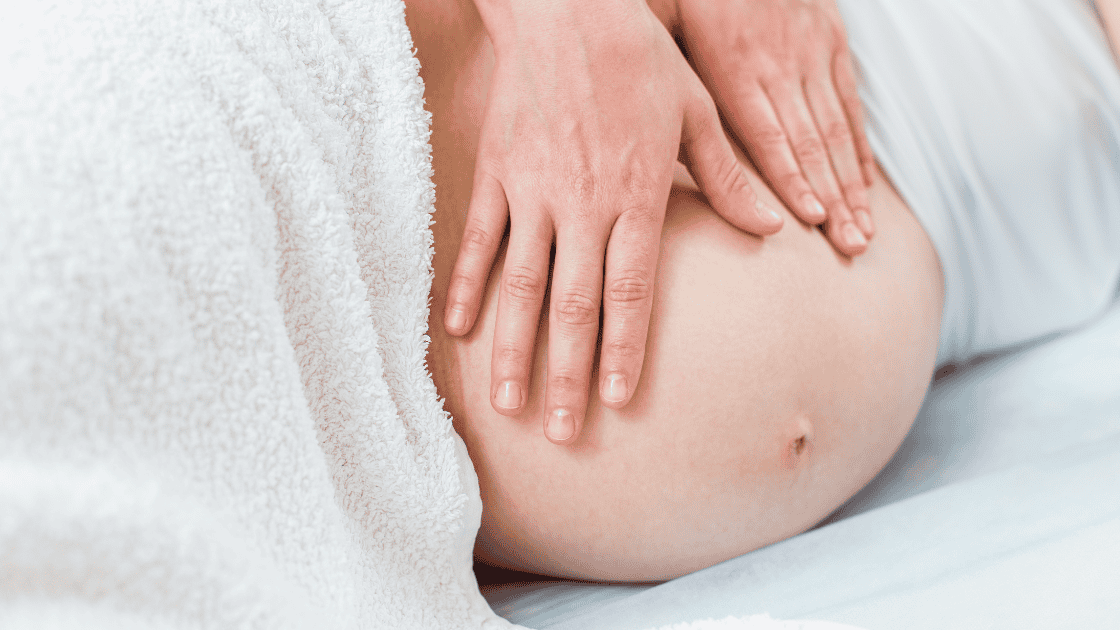
Sessions are performed in a side-lying position, fully supported by bolsters, with no pressure on the abdomen. Many clients are surprised by how deeply therapeutic this position can be.
Third Trimester Prenatal Massage: Preparing the Body
By the third trimester, your body is carrying more — more weight, more shifted balance, and often more interrupted sleep. Muscles in the low back, pelvis, and legs are working harder with every passing week.
This is when many clients find prenatal massage becomes a steady rhythm of care rather than an occasional appointment. Sessions slow down, become more deliberate, and focus on the areas under the most demand.
What third trimester sessions commonly support:
- Relief for low back and pelvic tension
- Softening through the hips and sacrum
- Nervous system regulation when sleep is disrupted
- Space to slow down and reconnect with your body before birth
Some clients maintain monthly sessions through this stage; others visit more frequently in the final weeks. Your RMT can help you find a rhythm that makes sense for your body and your schedule.
How Prenatal Massage Frequency Changes by Trimester
There’s no universal schedule — and no single answer to how often you should book. What tends to work well:
In the first trimester, if you choose to begin, occasional sessions are common while your body settles into early pregnancy.
In the second trimester, many clients establish a monthly rhythm as physical changes become more pronounced.
In the third trimester, more frequent sessions — every two to three weeks — are common, particularly as the due date approaches and the body is working hardest.
Your registered prenatal massage therapist will help you find what fits.
Ready to Book Your Prenatal Massage in Toronto?
At kāer in Leslieville, our Registered Massage Therapists are trained in prenatal care across all three trimesters. Every session is adapted to where you are in your pregnancy — your trimester, your comfort, and your care plan.
Prenatal massage is one part of a larger circle of care at kāer. If you’re building a pregnancy wellness plan, our Wellness Concierge can help you find the combination of services — massage, pelvic floor physiotherapy, prenatal yoga, acupuncture, and more — that’s right for you.